
Banks County Arrest Records and Charges
Banks County arrest records usually begin with a law-enforcement event. A person may be stopped, arrested, transported, booked, classified, and brought before a judge for bond or first appearance. The Banks County Jail is the local custody point for county law-enforcement agencies, and the Sheriff's Office is the law-enforcement record source for booking and incident records. The court charge record starts when the alleged offense is carried into a court or prosecutor process.
The Sheriff's Office site identifies Sheriff Carlton Speed and places the office and jail at 160 Windmill Farm Road, Homer, GA 30547, phone 706-677-2248. The jail page says the facility handles central intake, classification, an infirmary, and bond hearings by visiting judge or video court. For custody status, use the jail and inmate channels. For filed charges, disposition, and sentence, use the court file. The full case outcome belongs in the Banks County criminal court records file once the case is open.
The Banks County Sheriff's Office home page is the official public-facing source for the sheriff's office.
That office is the practical first stop for arrest, booking, incident, jail, and law-enforcement records that do not appear in a court docket.
Search Banks County Arrest Records
The best search path depends on the fact being checked. Current confinement and booking-related views route through the Sheriff's Southern Software Citizen Connect inmate page. The research captured tabs for current confinements, admits by date range, charges, arresting agency, custom dates, and 31-day date-limit instructions. Court charges route through the Clerk's Case Search link, Georgia Courts eAccess, Magistrate Court where preliminary proceedings or warrant applications exist, and Superior Court once a felony case is filed.
- Check custody or booking status through the jail and inmate record channel when the question is whether someone is confined.
- For the charge filed in court, search the Clerk case path or contact the Clerk of Superior Court for Superior Court criminal matters.
- Use Magistrate Court for warrant applications, first-appearance context, and preliminary criminal proceedings.
- Request law-enforcement records through the Sheriff's open-records route when the portal does not show the report or booking detail.
- Confirm the final result in the criminal case file before treating a charge as a conviction.
Municipal or city police involvement can add another access point. The Banks County report page lists non-emergency incident contacts, including the Sheriff's Office, Baldwin Police Department, Maysville Police Department, and Alto Police Department. If the arrest began with a city police agency, the incident report and the court charge may sit in different places.
Banks Charges After Arrest
Charges after arrest can shift from the booking label to a prosecutor-filed charge. The District Attorney is the chief prosecuting office for crimes committed in Banks County, and the DA decides how state criminal allegations proceed in Superior Court. An arresting officer's booking charge may not match the final filed count. The prosecutor may file, amend, reduce, drop, or decline charges as facts and legal review develop.
| Document | Who uses it | How it fits after arrest |
|---|---|---|
| Complaint or warrant application | Law enforcement, applicant, or Magistrate Court process | Supports early arrest, warrant, first-appearance, or probable-cause steps. |
| Accusation | Prosecutor | Files formal Georgia criminal charges in cases where an accusation is allowed. |
| Indictment | Grand jury | Returns formal felony charges for serious Superior Court prosecution. |
The Sheriff's Office of the Sheriff source describes warrant and court-process duties.
Banks Court Charge Status
A Banks County charge record is a point-in-time court record. It may show a pending charge before arraignment, then later show that the count was reduced, amended, dismissed, or resolved. The safest reading is to follow each count through the court docket to its final disposition. One arrest can produce several counts, and each count can have a different result.
| Status | What it means in a Banks County charge record |
|---|---|
| Pending | The charge is open and has not reached a final court result. |
| Amended | The filed charge changed, often after prosecutor review or court action. |
| Reduced | The case moved to a lower charge level or less severe count. |
| Dismissed | The court or prosecutor ended that count without a conviction on that charge. |
| Nolle prosequi | The prosecutor chose not to pursue that count, subject to Georgia practice and court entry. |
| Disposed | The charge has a result, such as plea, verdict, dismissal, or other final action. |
For law-enforcement records not found online, use the Banks County Sheriff's Office open records page.
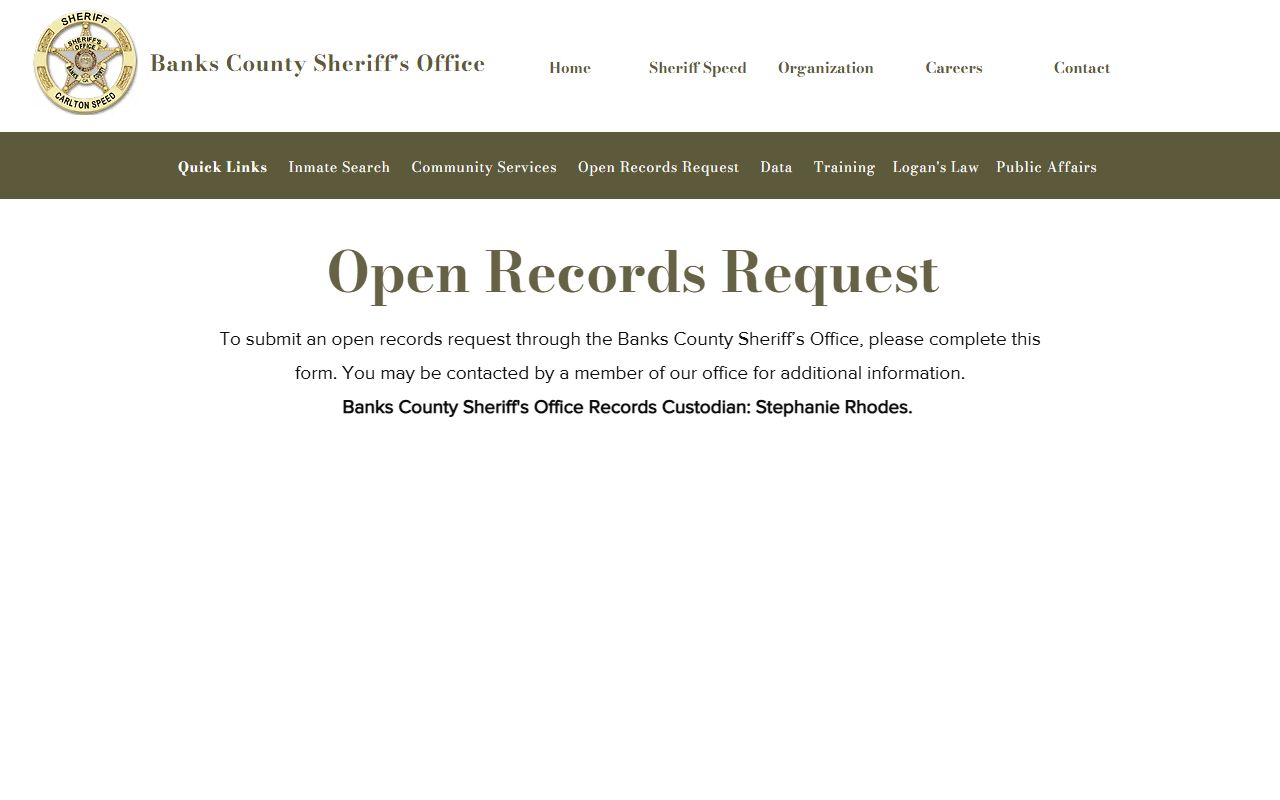
The open-records route is the fallback for public incident, accident, booking, and sheriff records that are not shown in the visible custody portal.
Banks Charges vs Convictions
Arrest records and court charges should not be used as proof that a person was found guilty. A booking entry may list an alleged offense at intake. A court charge may show what the prosecutor filed. A conviction only exists after a guilty plea, verdict, or other court result that establishes guilt. This distinction matters in Banks County because the court record can show charges that were dropped, amended, reduced, or dismissed before final disposition.
| Point | Charge after arrest | Conviction |
|---|---|---|
| What it is | An allegation or filed count. | A court finding or plea of guilt. |
| Where it appears | Booking view, Magistrate record, Clerk docket, or Superior Court file. | Disposition, sentence, judgment, or certified court result. |
| Can it change | Yes, it may be amended, reduced, or dismissed. | The result may be appealed or restricted only through proper legal channels. |
| How to verify | Compare booking data with the court docket. | Request the final disposition or certified copy from the court clerk. |
Banks Arrest Agency Sources
Arrest records can begin with the Sheriff's Office or a city police agency. The Banks County report page gives local contact paths for emergency, accident, sheriff, Baldwin Police, Maysville Police, and Alto Police matters. A person seeking an accident report, incident report, or arrest narrative should match the request to the agency that created the record. Court clerks can provide court-file information, but they are not the source for police narratives or jail operational records.
Banks County Sheriff's Office
160 Windmill Farm Road
Homer, GA 30547
706-677-2248
Monday-Friday, 8 a.m. to 5 p.m.
District Attorney
144 Yonah-Homer Road, Suite 7
Homer, GA 30547
706-677-6205
Monday-Friday, 8 a.m. to 5 p.m.
The Banks County report page gives general public-safety reporting contacts.
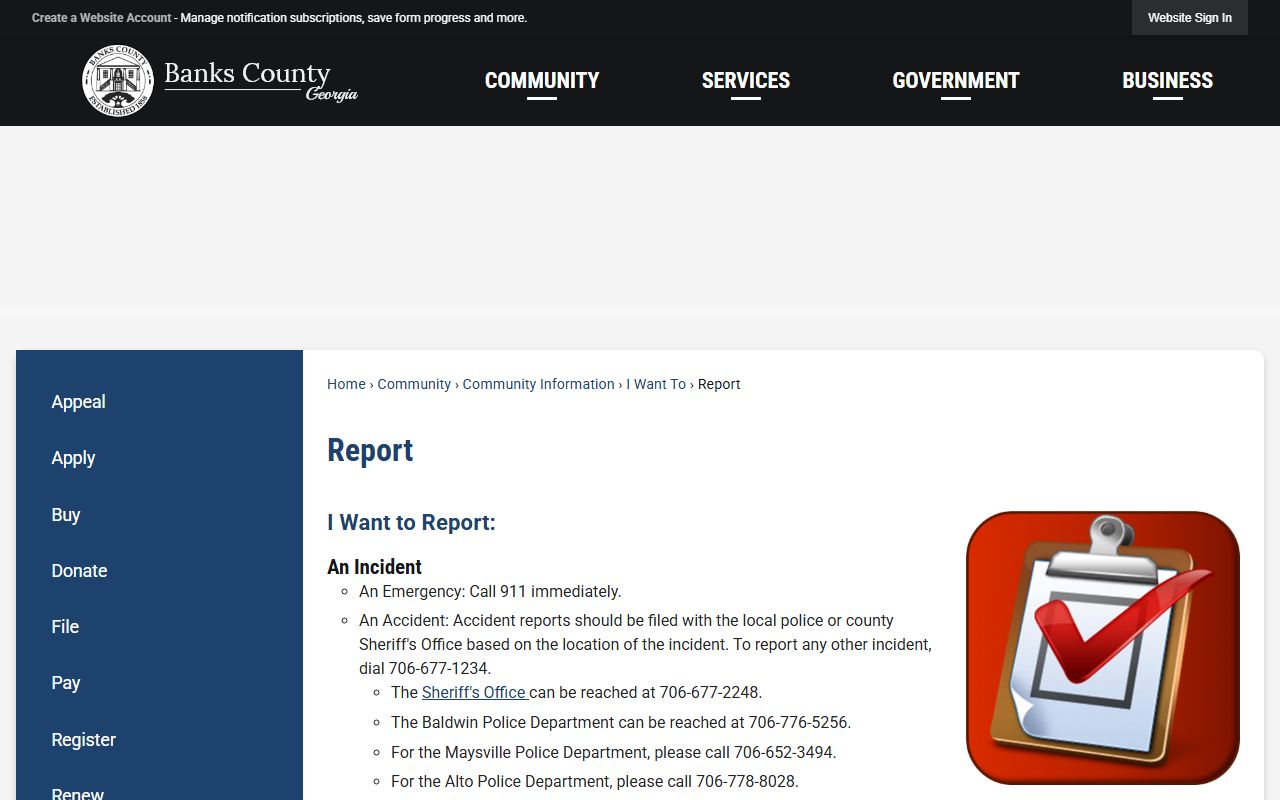
Those agency contacts help separate the arrest report source from the later court charge source.
Banks Court Charge Records
The court route starts after the arrest information enters the judicial process. Magistrate Court handles warrant applications and early criminal matters. Superior Court handles felony prosecutions, and the Clerk of Superior Court keeps Superior Court criminal records. Probate Court may handle some traffic and misdemeanor matters where local jurisdiction allows. Juvenile cases are restricted more heavily than adult cases, so public access may be limited even when an arrest occurred.
For Superior Court criminal charges, request the case number, docket, accusation or indictment, plea, disposition, or sentencing record from the Clerk of Superior Court. For a Magistrate warrant application or preliminary matter, contact Magistrate Court at 144 Yonah-Homer Road, Suite 10, phone 706-677-6270. For law-enforcement records tied to the same arrest, use the Sheriff's open-records route. These channels should be reconciled because each one captures a different part of the arrest-to-charge path.
The Sheriff's contact page gives general sheriff contact routing.
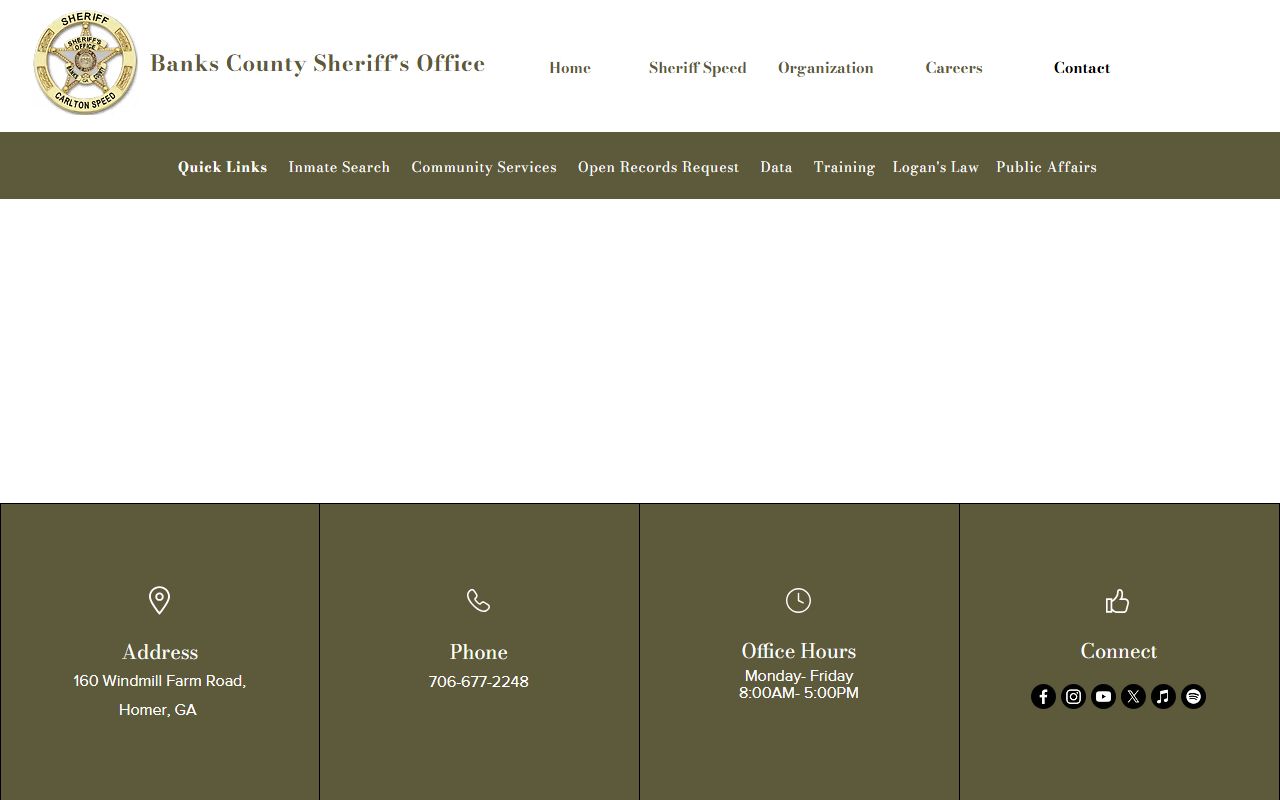
The contact page distinguishes general inquiries from open-records and property/evidence channels, which keeps charge-record requests aimed at the right office.
Georgia Criminal History Limits
Statewide criminal-history material is separate from a Banks County arrest record or court charge record. The Georgia Bureau of Investigation explains record restriction under O.C.G.A. 35-3-37, including routes that may involve the prosecutor or arresting agency depending on timing and eligibility. A local court docket can help prove a disposition, but the statewide criminal-history entry may have its own access and restriction process.
When a record is incomplete, compare the sheriff booking source, Magistrate Court record, Superior Court docket, and GBI-related criminal-history process. Do not assume that a jail charge filter, a Clerk case entry, and a statewide criminal history will update at the same time or display the same level of detail.
Restricted Banks Arrest Records
Some arrest and charge records are not released to the public, or are released only with redactions. Juvenile records, sealed court files, restricted criminal-history entries, victim information, mental-health details, full dates of birth, Social Security numbers, financial account numbers, and safety-sensitive investigative details may be withheld. Active investigations and unexecuted warrants can also limit what the Sheriff's Office or a court will confirm.
| Record type | Public access concern | Where to ask |
|---|---|---|
| Booking or incident record | May be redacted or withheld if investigation or safety limits apply. | Sheriff's open-records route. |
| Court charge record | Public unless sealed, restricted, juvenile, or otherwise limited by law. | Clerk or court that holds the case. |
| Juvenile charge | Usually more restricted than adult court records. | Juvenile Court or Clerk access process. |
| Restricted criminal history | May remain available to authorized criminal-justice users. | GBI, prosecutor, arresting agency, or court as applicable. |
Important: A dismissed or restricted charge should still be verified through the court, prosecutor, or agency that controls the record.