
Banks County Criminal Court Records
A criminal court record is the court's case file. In Banks County, felony prosecutions are Superior Court matters, and the Clerk of Superior Court is the access point for Superior Court criminal filings. The record can begin after a charging document is filed, then grow as the case moves through arraignment, motions, calendar calls, plea negotiations, trial settings, disposition, and sentencing. It is broader than a booking sheet. It is also narrower than a statewide criminal history because it reflects the local court case, not every agency entry tied to a person.
Georgia's trial structure matters. Banks County Superior Court handles felony cases and higher criminal proceedings in the Mountain Judicial Circuit. Magistrate Court handles warrant applications, first appearances, bond-related early steps, and other preliminary criminal matters. Probate Court may hear certain misdemeanors and traffic matters in counties without a state court unless a jury trial is requested. Juvenile matters use a more restricted access model. A user reading Banks County criminal court records should first identify the court, then request the file, docket, calendar entry, or certified disposition from that court's record holder.
The Banks County District Attorney page identifies the District Attorney as the chief prosecution office for crimes committed in Banks County. That office prosecutes cases, but case-file copies and court docket entries are not DA counter records. The public file normally routes through the Clerk or the court that created the entry.
The official District Attorney page is the local source for Banks County prosecutions.
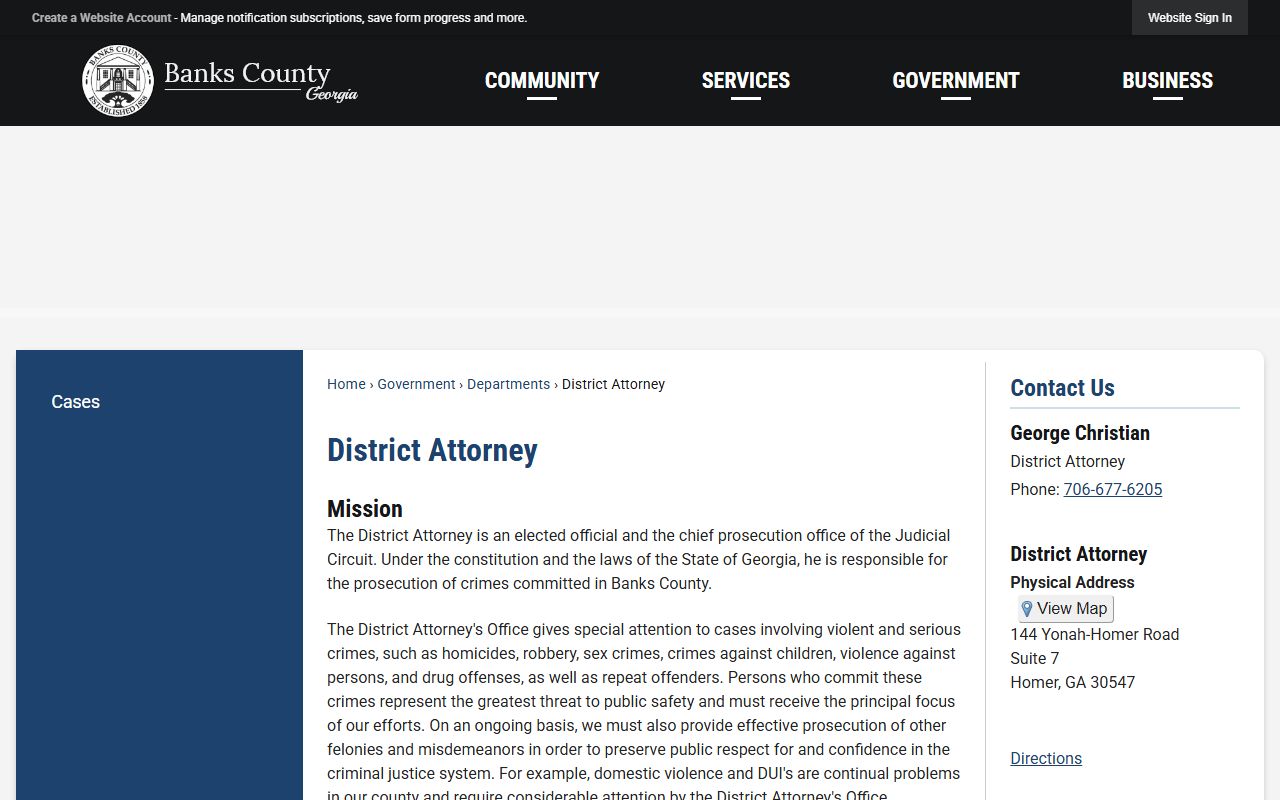
That prosecution role explains why charges may change before the final court disposition appears in the criminal case file.
Search Banks County Criminal Records
No single public portal was verified as covering every Banks County criminal court record and document. Start with the Clerk's Case Search link on the Banks Clerk site and the Georgia Courts eAccess page, which redirects users to provider systems and notes that an account may be required. If the online path does not show the case, use the Clerk counter, mail, or phone route. Certified electronic copies may be available through GSCCCA eCertification for participating criminal, civil, and real estate filings.
- Identify whether the case is Superior Court, Magistrate Court, Probate Court, or Juvenile Court.
- Search by defendant name or case number through the Clerk's Case Search link or Georgia eAccess when available.
- Use the Mountain Judicial Circuit calendars to confirm upcoming Banks County Superior Court settings.
- Request the docket, disposition, sentence, or certified copy from the Clerk of Superior Court when the record is a Superior Court criminal case.
- For booking-only information, use jail channels instead of treating the court file as an arrest log.
For office help, the Clerk of Superior Court is at 144 Yonah-Homer Road, Suite 8, Homer, GA 30547, phone 706-677-6240, with mail to P.O. Box 337. The GSCCCA profile lists Tim Harper as the Banks County Clerk of Superior Court and gives office hours as Monday through Friday, 8 a.m. to 5 p.m. The GSCCCA Banks County clerk profile also identifies the managed courts and county code. For prosecution questions, the District Attorney is at 144 Yonah-Homer Road, Suite 7, phone 706-677-6205.
The Banks County District Attorney staff directory gives office staff and contact details.
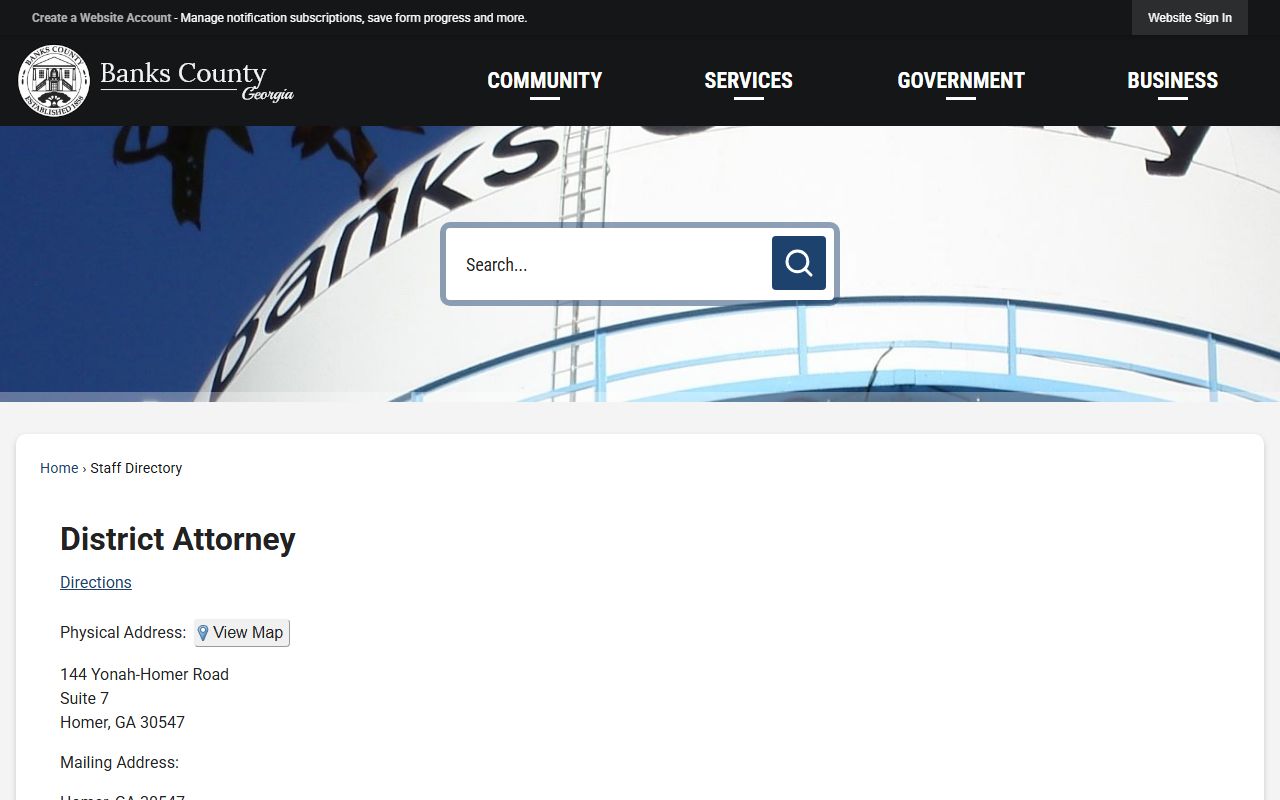
Use the DA contact for prosecution-office questions, not as a substitute for the court clerk's criminal case record.
Banks County Criminal Case Flow
A Banks County criminal court record changes as the case moves. Early docket entries may show filed charges and arraignment. Later entries may show motions, calendar calls, bond orders, plea settings, trial settings, a verdict or plea, sentencing, restitution, fines, probation terms, or revocation proceedings. A calendar entry is useful for timing, but the full case file is the better source for the final result.
Case flow: Charges Filed › Arraignment › Pretrial and Motions › Plea or Trial › Disposition › Sentencing
| Stage | What the Banks County record may show |
|---|---|
| Charges filed | Offense names, accusation or indictment details, charge level, and the court where the case opened. |
| Arraignment | The date charges are formally addressed and a plea may be entered. |
| Pretrial and motions | Requests for rulings, bond changes, discovery disputes, suppression issues, or calendar settings. |
| Plea or trial | A negotiated plea, jury or bench trial activity, verdict, acquittal, or dismissal. |
| Sentencing | Jail or prison time, probation, fines, restitution, court costs, and special conditions. |
Accountability court activity can also appear in criminal dockets. The Mountain Judicial Circuit lists Drug Court, Mental Health Court, Family Dependency Treatment Court, Parental Accountability Court, and a Daily Reporting Center. Program participation may create review hearings, compliance dates, sanctions, or incentives, but medical and treatment details should not be assumed public.
What Banks Criminal Records Show
Banks County criminal court records can contain several layers of information. Some fields identify the case. Others explain what has happened in court. A docket may list the defendant, court, case number, filing date, charge, hearing date, plea, disposition, and judge. The case file may include filed documents such as accusations, indictments, bond orders, motions, plea forms, sentencing sheets, and probation-related orders. Calendar snippets in the research showed the Mountain Judicial Circuit using fields such as case number, style, filing date, cause, parties, attorneys, notes, judge, hearing date, and court name.
| Field | What it shows |
|---|---|
| Case number | The court's identifier for locating the Banks County criminal case file. |
| Defendant | The accused person named in the court case, subject to redaction rules for sensitive identifiers. |
| Charge or offense | The filed criminal count, statute reference if shown, and any later amended or dismissed charge. |
| Arraignment or plea | The hearing or docket entry where the defendant responds to the charge. |
| Disposition | The result, such as guilty plea, verdict, dismissal, acquittal, or other final action. |
| Sentence | Confinement, probation, fines, restitution, credit for time served, or court-ordered conditions. |
| Bond and revocation entries | Release conditions, bond orders, probation violation claims, or revocation hearing activity. |
The Banks County Public Defender page gives local indigent-defense information.
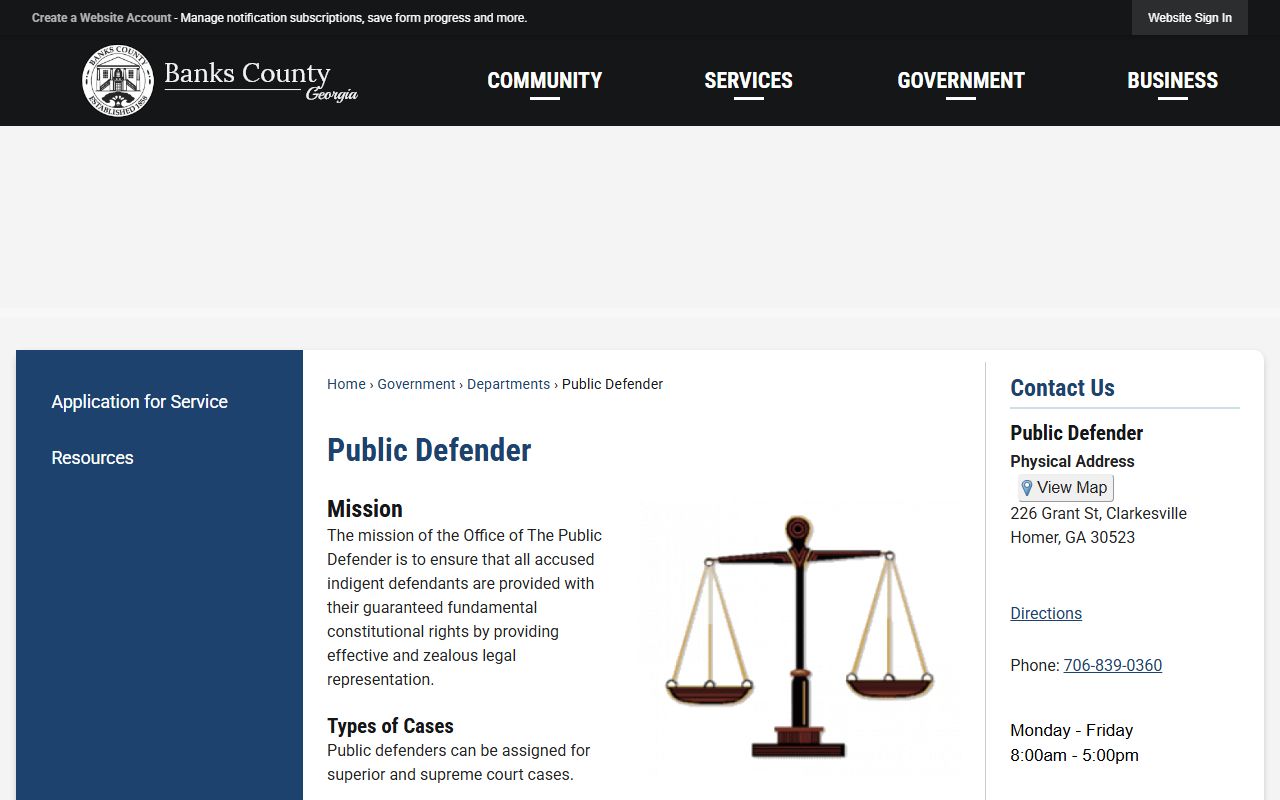
Defense representation can affect the record through motions, plea negotiations, trial settings, and sentencing documents.
Banks Charges vs Convictions
A charge is not a conviction. Banks County criminal court records may show charges that were filed after arrest, then reduced, amended, dismissed, or resolved by plea or trial. For a closer look at the charging stage itself, use the Banks County arrest records and court charges page. The criminal case file is where the result should be checked before treating a charge as a final outcome.
| Point | Charge | Conviction |
|---|---|---|
| Meaning | An allegation filed or held for prosecution. | A finding or plea of guilt entered by the court. |
| Timing | Appears before the case is resolved. | Appears after plea, verdict, or final court action. |
| Record value | Shows what was alleged at that stage. | Shows the final guilty outcome and sentence if one was entered. |
| Caution | May later be dropped, reduced, or dismissed. | May still be subject to appeal, correction, or record restriction where law allows. |
Read Banks Criminal Dispositions
Disposition is the result of a criminal case or charge. A Banks County criminal court record may show guilty, not guilty, dismissed, nolle prosequi, acquitted, reduced, or another result allowed by the court. Sentencing is the next question. The sentence may include jail or prison time, probation, fines, costs, restitution, community service, treatment-court participation, or special conditions. When a person needs proof of the outcome for licensing, immigration, employment review, or another formal reason, the safer request is a certified disposition or certified copy from the Clerk rather than a screenshot.
The Georgia Bureau of Investigation explains record restriction under O.C.G.A. 35-3-37 on the GBI criminal history record restrictions page.
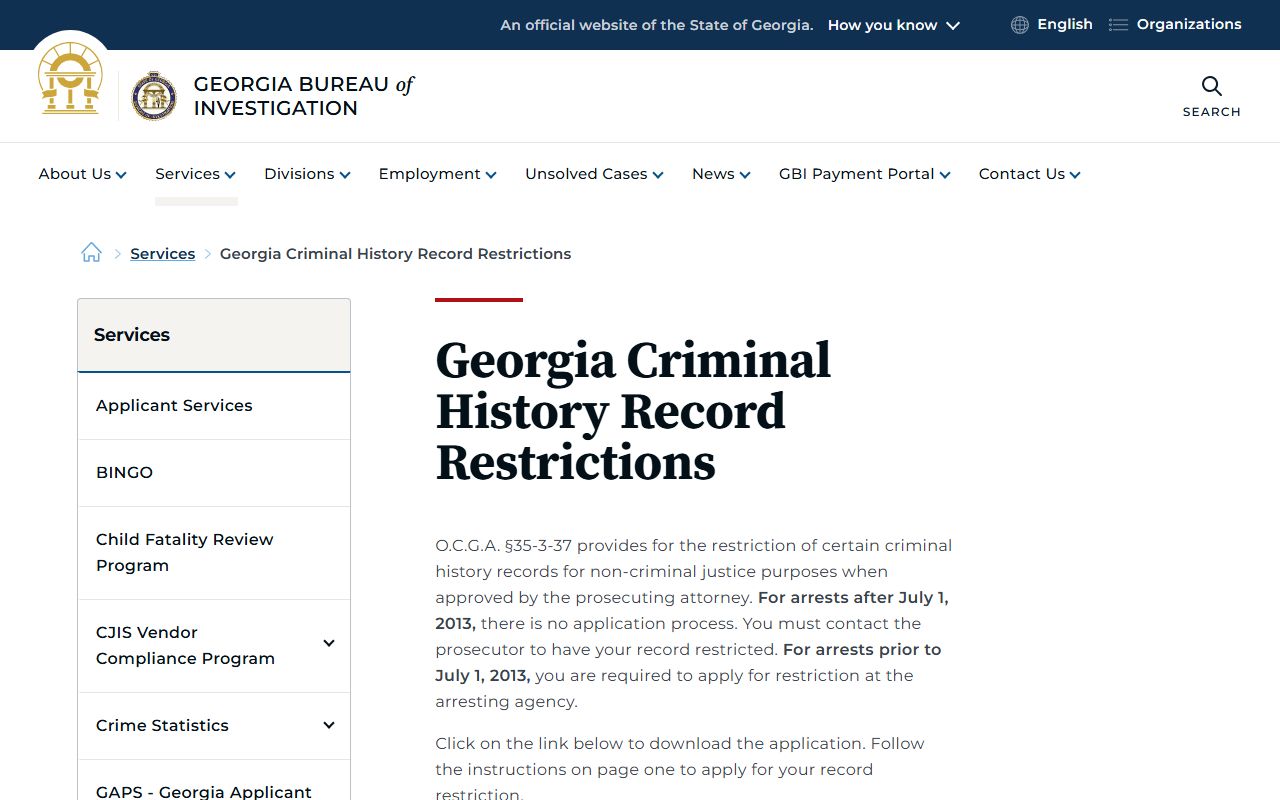
That state process is separate from merely reading a Banks County disposition in the court file.
Public Access to Banks Criminal Records
Georgia law favors access to public records, but criminal court records are not all released in the same way. The Georgia Open Records Act guide covers public-record access and request procedures. Uniform Superior Court Rule 21 states that Superior Court records are public unless law or the sealing procedure limits access. Court-file records should be requested from the court clerk. Law-enforcement records, incident reports, and booking records should be requested through the Sheriff's Office open-records route.
Key access rules: O.C.G.A. 50-18-70 presumes public access unless a law or court order restricts disclosure. O.C.G.A. 50-18-71 covers inspection, copies, and allowable costs. Uniform Superior Court Rule 21 governs limits on access to Superior Court files.
The Georgia court filing redaction source cites O.C.G.A. 9-11-7.1 for sensitive personal information in court filings.
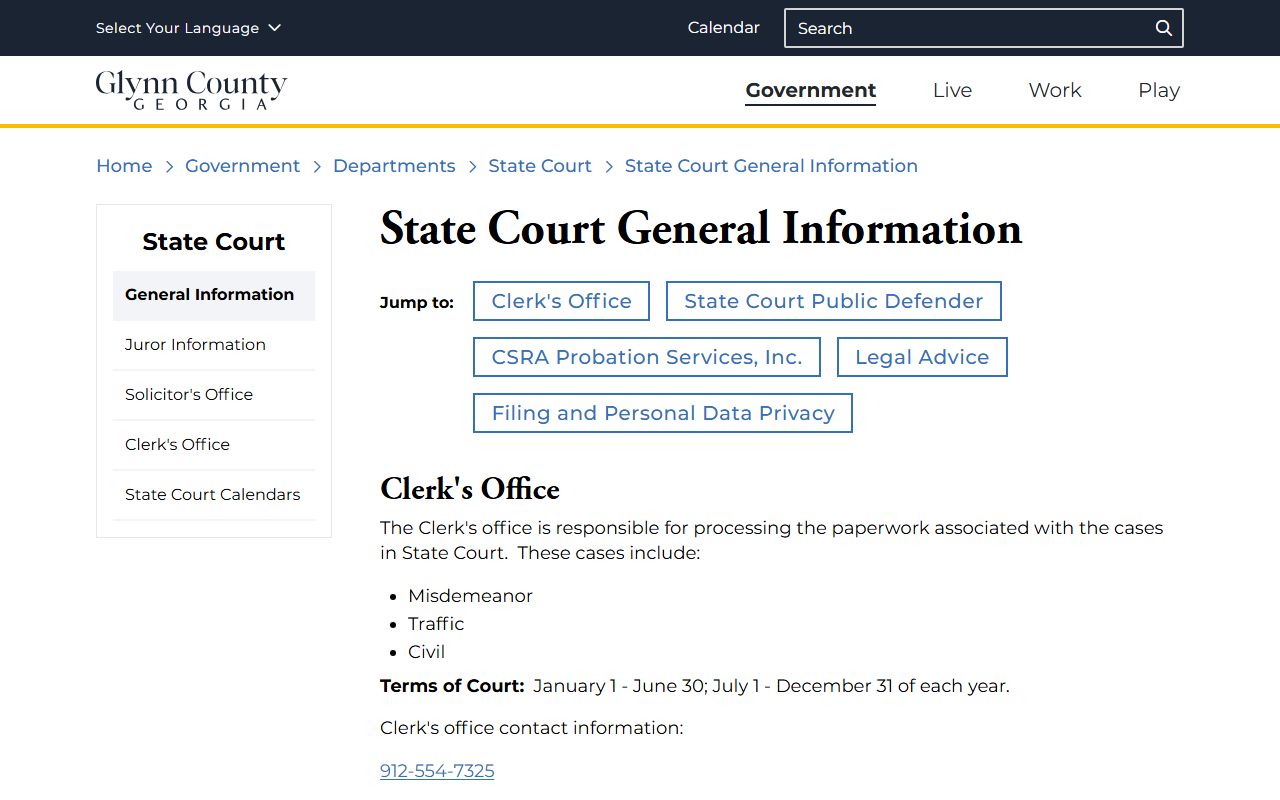
That redaction rule is why public copies should not be expected to display full Social Security numbers, full birth dates, or full financial account data.
Restricted Banks Criminal Records
Georgia commonly uses the term record restriction for eligible criminal-history limits. It is not always the same thing as destroying a file. A restricted record may be hidden from ordinary public dissemination but remain available to law-enforcement agencies, prosecutors, courts, or other authorized users. Juvenile cases, sealed matters, mental-health details, victim information, sensitive identifiers, and certain ongoing-investigation material may also be withheld or redacted.
| Point | Sealed or restricted | Expunged |
|---|---|---|
| Georgia usage | Often handled as record restriction under O.C.G.A. 35-3-37. | Not the best casual term for Georgia criminal-history limits. |
| Public access | May be hidden from ordinary public users after approval. | Do not assume the public file was destroyed. |
| Who may still see it | Criminal-justice agencies and authorized users may retain access. | Access depends on the actual order and statute. |
| Where to start | Determine whether the record is a court case, booking record, prosecutor record, or GCIC entry. | Ask the court or counsel for the correct Georgia procedure. |
The juvenile public information source cites Georgia juvenile access limits.
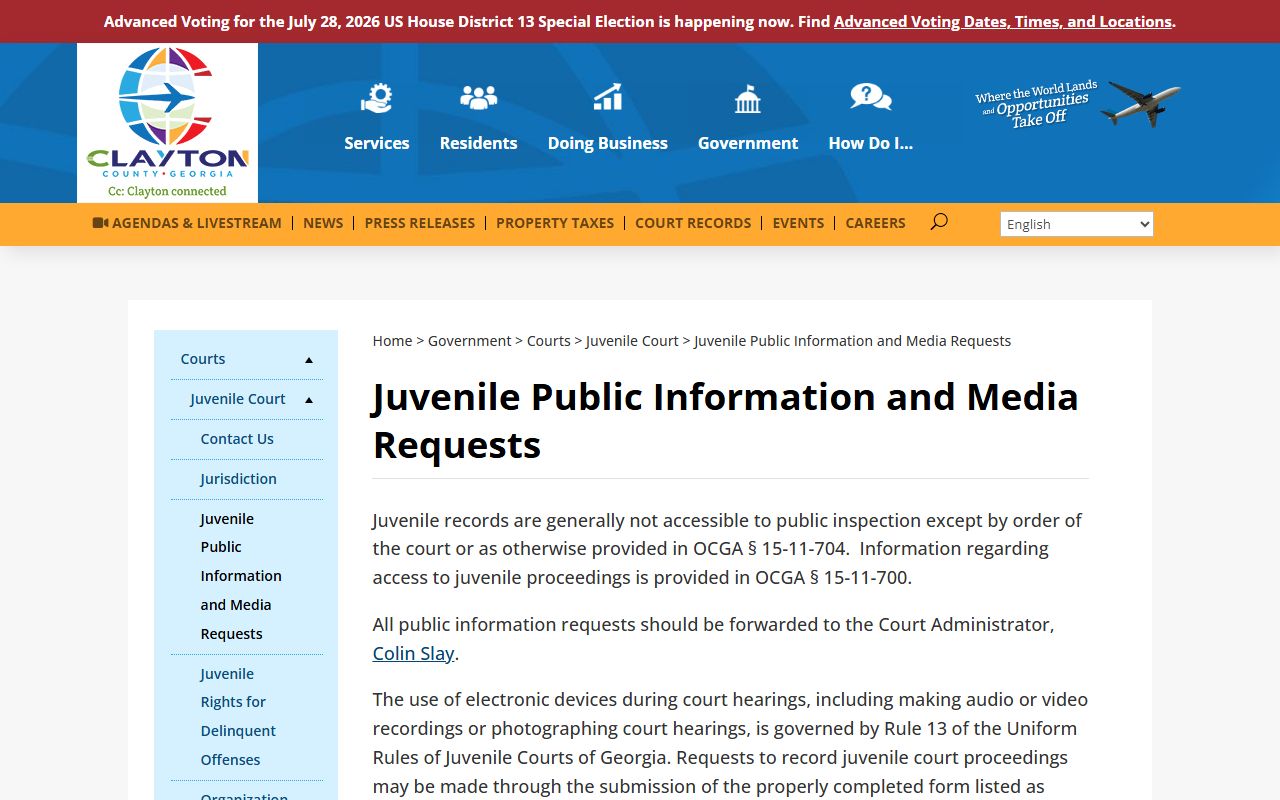
Juvenile limits are important because Banks County juvenile records are not ordinary adult criminal court records.
Banks Criminal Background Limits
A local court file is not the same as a regulated background check. A Banks County criminal court record can be useful for reading a case outcome, confirming a sentence, or locating a certified disposition. It should not be treated as a complete statewide or national criminal-history report. Georgia criminal-history access, GCIC dissemination rules, employer screening, tenant screening, credit use, and licensing review can involve separate legal standards and authorization requirements.
Important: Do not use casual court lookups for FCRA-regulated employment, tenant, credit, or insurance screening decisions.